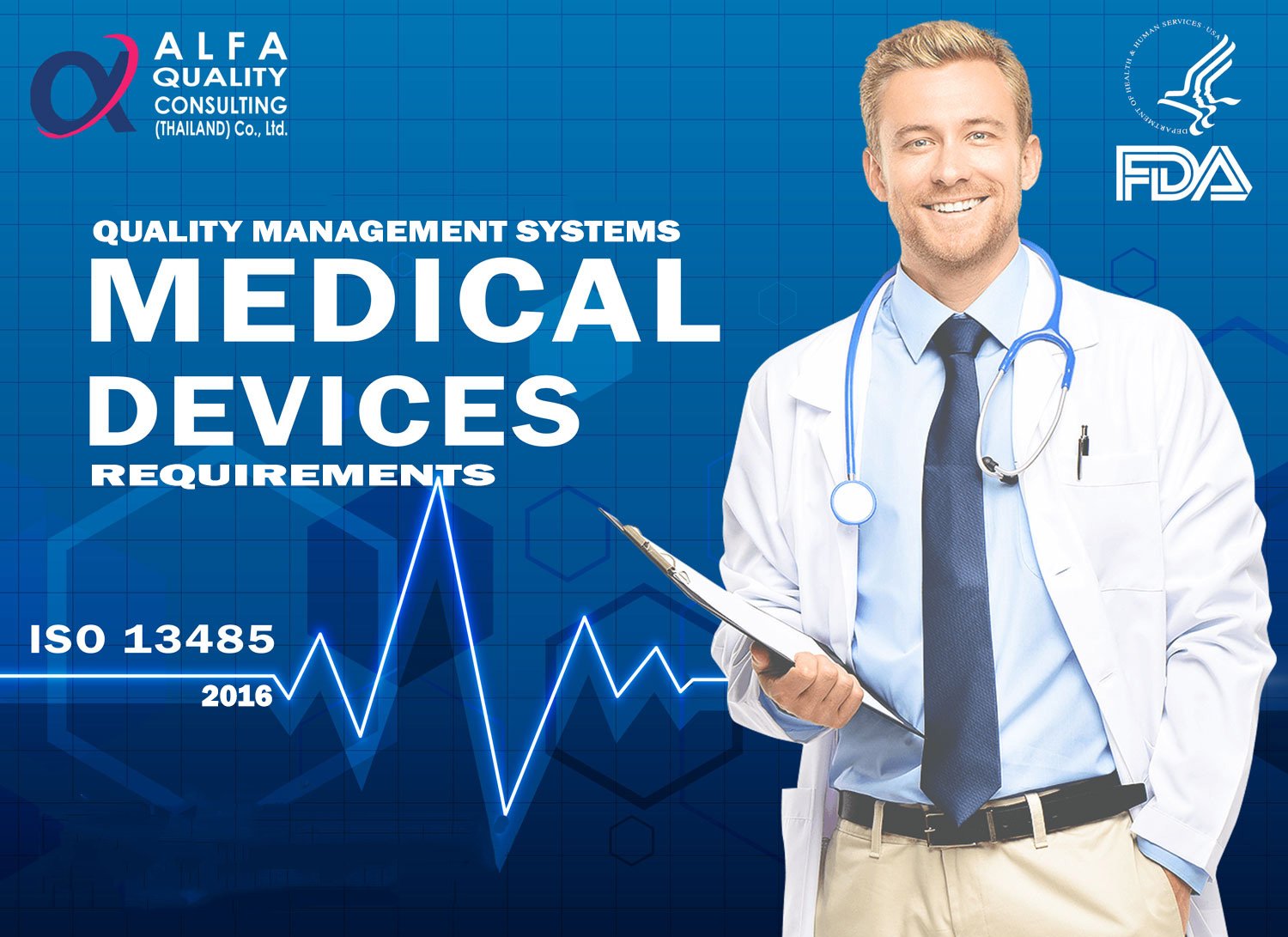
ISO 13485:2016
Medical Devices Quality Management System
1. History and Evolution
ISO 13485 was first published in 2003 as a standalone quality management system standard specifically for medical device manufacturers, diverging from ISO 9001's focus on continual improvement to emphasize regulatory compliance and risk management. The 2016 revision aligned the standard with current regulatory requirements globally, including the EU Medical Device Regulation (MDR), FDA Quality System Regulation (QSR), and other national frameworks. It represents a fundamental shift from "quality for quality's sake" to "quality as a regulatory imperative" where patient safety is the paramount objective.
2. Scope and Application
ISO 13485 applies to organizations involved in the design, development, production, storage, distribution, installation, servicing, and disposal of medical devices. It covers all device classes (I, II, III) and includes in-vitro diagnostic devices (IVDs). The standard is applicable to all suppliers in the medical device supply chain, from raw material suppliers to contract manufacturers, and is mandatory for market access in most global jurisdictions including the EU, Canada, Australia, and increasingly recognized by the FDA.
3. Definitions and Terminology
| Term | Definition |
|---|---|
| Medical Device | An instrument, apparatus, implement, machine, appliance, implant, in vitro reagent or calibrator, software, material, or other similar article intended for diagnosis, prevention, monitoring, treatment, or alleviation of disease. |
| Design Controls | A systematic process to ensure that device design meets user needs and intended use, including design inputs, outputs, verification, validation, and transfer. |
| Advisory Notice | A notice issued by the organization post-market to supplement or modify information about a device. |
| Complaint | A written, electronic, or oral allegation that a medical device may have failed to meet its specifications. |
| Post-Market Surveillance | Systematic collection and analysis of data on the experience of a device after it has been released to the market. |
4. Fundamental Concepts
The theoretical foundation of ISO 13485 is rooted in the unique regulatory and ethical obligations of medical device manufacturing. Unlike general manufacturing where defects result in customer dissatisfaction or financial loss, medical device defects can result in patient injury or death. Therefore, ISO 13485 operates on the premise that quality management is not optional—it is a moral and legal imperative. The standard shifts the focus from customer satisfaction (ISO 9001) to patient safety and regulatory compliance.
Regulatory Compliance as the Primary Objective
ISO 13485 explicitly requires that organizations identify and comply with applicable regulatory requirements in all markets where devices are sold. The theoretical insight is that regulatory requirements are not constraints to be minimized; they are the baseline for patient safety. The standard mandates that regulatory compliance be integrated into every process, from design and development through production and post-market surveillance. This requires organizations to maintain a "Regulatory Requirements Matrix" that maps specific clauses to regional regulations (FDA 21 CFR Part 820, EU MDR, Health Canada SOR, etc.).
Design Controls and the Design History File (DHF)
A cornerstone of ISO 13485 is the mandatory implementation of Design Controls for Class II and III devices. The theoretical basis is that design is the most critical phase where patient safety is determined. Design Controls require a structured process: identifying user needs (Design Inputs), translating them into technical specifications (Design Outputs), verifying that outputs meet inputs (Design Verification), validating that the device meets user needs in actual or simulated use (Design Validation), and formally transferring the design to manufacturing (Design Transfer). All of this must be documented in the Design History File (DHF), which provides objective evidence that the design process was controlled and traceable.
Risk Management Integration (ISO 14971)
ISO 13485 mandates the integration of risk management throughout the device lifecycle, typically implemented through ISO 14971. The theoretical framework is that risk is not a static property but a dynamic variable that must be continuously assessed and mitigated. Risk management must be applied during design (to identify and mitigate design-related risks), during manufacturing (to control process-related risks), and post-market (to monitor field performance and identify emerging risks). The Risk Management File must be maintained as a living document that evolves with the device.
Traceability and Data Integrity
Medical devices require unprecedented levels of traceability due to the potential for recalls and field safety corrective actions. ISO 13485 requires that organizations maintain traceability from raw materials through manufacturing to the end user (where required by regulations). The theoretical challenge is that traceability systems must be robust enough to enable rapid recall execution while being practical enough to implement without creating excessive administrative burden. This involves lot/batch control, unique device identification (UDI), and electronic record systems with audit trails.
When and Where ISO 13485 Applies
ISO 13485 applies to any organization manufacturing medical devices for commercial distribution. It is enforced by regulatory bodies globally and is a prerequisite for CE marking (EU), FDA registration (USA), Health Canada licensing, and TGA registration (Australia). Certification is typically conducted by Notified Bodies (EU) or accredited registrars.
5. Manufacturing Applications
ISO 13485 is applied through rigorous design control procedures, validated manufacturing processes (especially for sterile devices), comprehensive documentation systems (DHF, DMR, DHR), complaint handling and CAPA systems, and post-market surveillance programs. It dictates the requirements for cleanroom manufacturing, sterilization validation, biocompatibility testing, and software validation for devices containing embedded software.
6. Implementation Guide
- Conduct a gap analysis comparing current QMS to ISO 13485:2016 requirements.
- Establish a cross-functional implementation team with regulatory affairs expertise.
- Define the scope of the QMS, including all device families and manufacturing sites.
- Implement Design Controls with structured DHF procedures for all Class II/III devices.
- Integrate ISO 14971 risk management into all lifecycle phases.
- Establish validated manufacturing processes, especially for sterile devices.
- Implement comprehensive complaint handling, CAPA, and post-market surveillance systems.
- Conduct internal audits and management reviews.
- Engage a Notified Body or accredited registrar for certification audit.
7. Required Documentation
Quality Manual, Design History File (DHF), Device Master Record (DMR), Device History Record (DHR), Risk Management File (ISO 14971), Regulatory Requirements Matrix, Complaint and CAPA Records, Post-Market Surveillance Reports, Sterilization Validation Reports, Biocompatibility Test Reports, Software Validation Records (IEC 62304), and Internal Audit Reports.
8. Audit Preparation
Verify that Design Controls are fully implemented with complete DHF documentation. Check that risk management is integrated throughout the lifecycle and that the Risk Management File is current. Ensure that manufacturing processes are validated, especially sterilization and cleanroom operations. Review complaint handling and CAPA records to demonstrate effective corrective actions. Confirm that post-market surveillance data is being systematically collected and analyzed.
9. Industrial Examples
A startup medical device company developing a novel surgical instrument implemented ISO 13485 from inception. By conducting thorough user needs analysis and design validation with actual surgeons, they identified a critical usability issue that could have led to incorrect device positioning during surgery. Redesigning the device interface before production prevented a potential field safety recall and ensured a smooth FDA 510(k) clearance and EU CE marking.
10. Common Mistakes
- Treating ISO 13485 as an ISO 9001 upgrade without addressing medical device-specific requirements.
- Implementing Design Controls as a paperwork exercise rather than a rigorous engineering process.
- Failing to integrate risk management (ISO 14971) throughout the entire lifecycle.
- Neglecting post-market surveillance and complaint trend analysis.
- Not validating software embedded in medical devices according to IEC 62304.
- Ignoring regulatory requirements for specific markets, leading to market access delays.
- Not maintaining traceability systems robust enough to support rapid recalls.
11. Integration with Other Standards
ISO 13485 integrates with ISO 14971 (Risk Management), IEC 62304 (Medical Device Software), ISO 10993 (Biocompatibility), ISO 11135/11137 (Sterilization), ISO 11607 (Packaging), and ISO 9001 (Quality Management). It is the foundational standard for medical device quality, upon which all regulatory submissions are built.
12. Frequently Asked Questions
Q: Can we be certified to ISO 13485 without being certified to ISO 9001?
A> Yes. ISO 13485 is a standalone standard and does not require ISO 9001 certification. While ISO 13485 was originally derived from ISO 9001, the 2016 revision made it fully independent. Many medical device companies are certified only to ISO 13485.
13. Certification Preparation
Demonstrate a mature QMS where Design Controls are living documents with complete traceability. Show evidence of integrated risk management and validated manufacturing processes. Verify that complaint handling and CAPA systems are effective. Prove that post-market surveillance is systematic and that regulatory requirements are identified and met for all target markets.
14. Future Trends
The future of ISO 13485 involves greater integration with cybersecurity requirements (IEC 81001-5-1) as connected medical devices proliferate, enhanced requirements for AI/ML-based devices, and harmonization of global regulatory frameworks through the International Medical Device Regulators Forum (IMDRF). Additionally, there is increasing emphasis on sustainability and environmental impact in device design and packaging.
Article Created by AlfaQMS Thailand
© 2026 Alfa Quality Consulting Thailand Co., Ltd. All rights reserved.
Leave a Comment