Lean Six Sigma Yellow Belt
Foundation Level in Process Improvement
1. History and Evolution
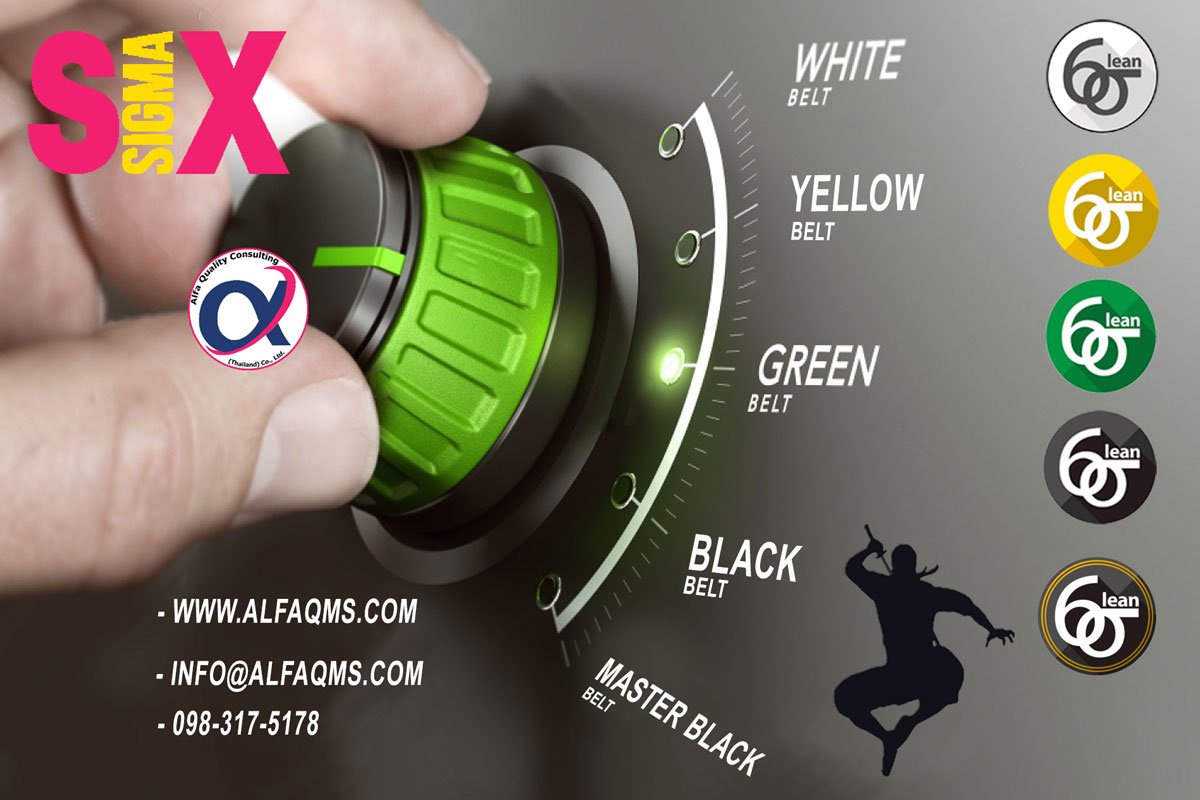
Lean Six Sigma Yellow Belt emerged from the convergence of two powerful improvement methodologies: Lean (originating from Toyota Production System in the 1950s) and Six Sigma (developed at Motorola in the 1980s by Bill Smith). The belt ranking system, borrowed from martial arts, was introduced to create a structured competency framework for improvement practitioners. Yellow Belt represents the entry-level certification, providing foundational knowledge for team members participating in improvement projects. The Yellow Belt concept gained prominence in the early 2000s as organizations recognized the need to engage all employees in improvement activities, not just dedicated Black Belts. Today, Yellow Belt certification is offered by numerous training providers worldwide, with content standardized through organizations like the American Society for Quality (ASQ) and the International Association for Six Sigma Certification (IASSC).
2. Scope and Application
Lean Six Sigma Yellow Belt applies to any professional seeking foundational knowledge in process improvement methodologies. Yellow Belts typically serve as team members on improvement projects led by Green or Black Belts, contribute subject matter expertise, collect and analyze data, and implement solutions within their areas of responsibility. The certification is applicable across all industries including manufacturing, healthcare, financial services, technology, government, and non-profit organizations. Yellow Belts are particularly valuable in organizations building a broad-based improvement culture where many employees need basic problem-solving and data analysis skills.
3. Definitions and Terminology
| Term | Definition |
|---|---|
| DMAIC | Five-phase problem-solving methodology: Define, Measure, Analyze, Improve, Control. |
| VOC (Voice of Customer) | Customer requirements and expectations that drive quality specifications. |
| CTQ (Critical to Quality) | Key measurable characteristics that must meet customer requirements. |
| Process Map | Visual representation of process steps, inputs, and outputs. |
| Basic Statistics | Fundamental statistical concepts including mean, median, standard deviation. |
| Root Cause | Fundamental reason for a problem that, if eliminated, prevents recurrence. |
4. Fundamental Concepts
Lean Six Sigma Yellow Belt represents the foundational layer of a comprehensive improvement methodology that combines two powerful traditions: the waste-elimination focus of Lean and the variation-reduction rigor of Six Sigma. Understanding Yellow Belt requires appreciating not just the tools it teaches, but the underlying philosophy of data-driven decision making, customer-focused improvement, and systematic problem solving that distinguishes it from ad-hoc approaches to quality and efficiency.
The Theoretical Foundation
At its core, Lean Six Sigma is built on a deceptively simple premise: variation is the enemy of quality, and waste is the enemy of efficiency. Six Sigma addresses variation—the natural tendency of any process to produce different outputs even under seemingly identical conditions. Lean addresses waste—the activities that consume resources without creating customer value. When combined, these two perspectives create a powerful framework for understanding and improving any process.
The theoretical foundation rests on several key insights. First, every process can be described mathematically. Whether it's manufacturing a part, processing a loan application, or treating a patient, every process has inputs, transformations, and outputs that can be measured, analyzed, and optimized. This mathematical perspective transforms subjective impressions ("this process seems slow") into objective data ("this process has a mean cycle time of 47 minutes with a standard deviation of 12 minutes").
Second, variation has causes, and those causes can be identified and controlled. Traditional quality management accepted variation as inevitable and focused on inspection to catch defects. Six Sigma recognizes that variation comes from two sources: common causes (inherent to the process) and special causes (assignable to specific events). Common causes require fundamental process redesign, while special causes require identification and elimination of the specific factors. This distinction, pioneered by Walter Shewhart in the 1920s, remains central to statistical thinking.
Third, the customer defines quality. Quality is not conformance to internal specifications—it is conformance to customer requirements. This insight, championed by quality pioneers like W. Edwards Deming and Joseph Juran, shifts the focus from internal metrics to external value. A process that consistently meets internal specifications but doesn't satisfy customers is, by definition, not a quality process.
The DMAIC Framework
The DMAIC (Define, Measure, Analyze, Improve, Control) framework provides the structured methodology for Lean Six Sigma projects. Each phase has specific objectives, tools, and deliverables:
Define Phase: Establishes the problem, scope, goals, and team. The key deliverable is the Project Charter, which defines the business case, problem statement, goal statement, scope, timeline, and team members. The Define phase also establishes the Voice of Customer (VOC) and translates it into Critical to Quality (CTQ) requirements. This phase answers the questions: "What is the problem?", "Why does it matter?", "What are we trying to achieve?", and "Who will work on it?"
Measure Phase: Establishes the current state baseline and validates the measurement system. Key activities include process mapping, data collection planning, measurement system analysis (MSA), and baseline capability assessment. This phase answers: "How is the process currently performing?" and "Can we trust our measurements?" Without reliable measurements, improvement efforts are based on guesswork rather than fact.
Analyze Phase: Identifies root causes of problems and variation. Tools include statistical analysis (hypothesis testing, regression, ANOVA), root cause analysis (5-Why, Fishbone diagrams), and process analysis. This phase answers: "What are the root causes of the problem?" and "Which factors have the greatest impact on the output?" The goal is to move from symptoms to fundamental causes.
Improve Phase: Develops, tests, and implements solutions to address root causes. Tools include brainstorming, design of experiments (DoE), pilot testing, and implementation planning. This phase answers: "What solutions will address the root causes?" and "How do we verify that solutions work?" The emphasis is on testing solutions on a small scale before full implementation.
Control Phase: Sustains the improvements and prevents regression. Tools include control plans, statistical process control (SPC), standardization, and monitoring systems. This phase answers: "How do we ensure the improvements are sustained?" and "How do we detect when the process begins to drift?" Without proper control, improvements typically erode over time as people revert to old habits.
Statistical Thinking for Yellow Belts
Yellow Belt introduces foundational statistical concepts that enable data-driven decision making. Key concepts include:
Data Types: Understanding the difference between discrete (count) data and continuous (measurement) data is fundamental, as different data types require different analytical tools. Discrete data (number of defects, pass/fail results) follows different statistical distributions than continuous data (dimensions, time, weight).
Measures of Central Tendency: Mean (average), median (middle value), and mode (most frequent value) describe where data is centered. Understanding which measure is appropriate for a given situation is crucial for accurate interpretation.
Measures of Variation: Range, variance, and standard deviation describe how data is spread. Standard deviation is particularly important because it quantifies the typical distance of data points from the mean, enabling prediction of process performance.
Normal Distribution: Many natural processes follow the bell-shaped normal distribution. Understanding this distribution enables prediction of process outputs and calculation of defect rates. The 68-95-99.7 rule (68% of data within 1 standard deviation, 95% within 2, 99.7% within 3) is a fundamental concept.
When and Where Yellow Belt Applies
Yellow Belt is most valuable for professionals who:
- Participate as team members on improvement projects
- Need basic problem-solving skills for daily work
- Want to understand improvement methodologies without leading complex projects
- Work in organizations building broad-based improvement culture
- Seek foundation for advancement to Green Belt or Black Belt
Yellow Belt is less appropriate for those seeking to lead complex, cross-functional projects (Green Belt) or transformational initiatives (Black Belt). It's also less valuable in organizations without active improvement projects where Yellow Belts can apply their skills.
Integration with Organizational Strategy
Yellow Belt certification is most effective when integrated with organizational improvement strategy. This includes clear project selection aligned with strategic priorities, visible leadership support, recognition systems for Yellow Belt contributions, and career paths that value improvement capabilities. Organizations that treat Yellow Belt as isolated training without integration typically see low application rates and poor sustainability.
The Role of Yellow Belts in Improvement Culture
Yellow Belts play a crucial role in building organizational improvement culture. They serve as improvement ambassadors in their work areas, apply basic problem-solving to daily issues, contribute effectively to project teams, and create a common language for improvement across the organization. The cumulative impact of many Yellow Belts applying basic tools can be transformative, even without complex statistical analysis.
5. Manufacturing Applications
Yellow Belt skills are applied daily in manufacturing environments. Common applications include participating in Kaizen events, collecting and analyzing production data, contributing to root cause analysis for quality issues, supporting 5S workplace organization, assisting in standardized work development, and implementing error-proofing devices. Yellow Belts often lead small improvement projects in their work areas, applying basic DMAIC methodology to solve local problems.
6. Implementation Guide
- Identify employees who would benefit from Yellow Belt training (team members, subject matter experts, frontline supervisors).
- Select accredited training provider with curriculum aligned to ASQ or IASSC body of knowledge.
- Deliver 10-20 hours of training covering DMAIC, basic statistics, and Lean tools.
- Include practical exercises and case studies relevant to participants' work.
- Administer certification exam to validate knowledge acquisition.
- Assign Yellow Belts to improvement project teams for practical application.
- Establish Yellow Belt community of practice for ongoing learning.
- Recognize and celebrate Yellow Belt contributions to improvement projects.
- Create career paths that value Yellow Belt certification.
- Provide refresher training and advanced training opportunities.
7. Required Documentation
Training materials and curriculum, certification exam and passing criteria, Yellow Belt registry, project team assignments, project charters with Yellow Belt participation, improvement results documentation, recognition program records, and ongoing development plans.
8. Audit Preparation
Verify that Yellow Belt training is from accredited provider. Check that certification exam validates knowledge appropriately. Confirm that Yellow Belts are actively applying skills on project teams. Review improvement results achieved with Yellow Belt participation. Assess recognition and career development for Yellow Belts. Evaluate ongoing learning and skill refreshment mechanisms.
9. Industrial Examples
A medical device manufacturer trained 150 employees as Yellow Belts over two years. These Yellow Belts participated in over 40 improvement projects, contributing to $2.3 million in annual savings, 35% reduction in quality defects, and 28% improvement in on-time delivery. The broad-based improvement capability also strengthened the organization's culture of continuous improvement.
10. Common Mistakes
- Training employees without providing opportunities to apply skills on projects.
- Expecting Yellow Belts to lead complex projects beyond their capability level.
- Not integrating Yellow Belt certification with organizational improvement strategy.
- Failing to recognize and reward Yellow Belt contributions.
- Providing training without practical exercises or real-world applications.
- Not creating career paths that value improvement capabilities.
- Treating certification as one-time event rather than ongoing development.
11. Integration with Other Standards
Yellow Belt integrates with IATF 16949 (Clause 10.3 - Continual improvement, Clause 7.2 - Competence), ISO 9001 (process approach, evidence-based decisions), Lean Manufacturing (waste elimination), and organizational competency development programs. Yellow Belt skills directly support internal audit capabilities, problem-solving requirements, and data-driven decision making mandated by quality management standards.
12. Frequently Asked Questions
Q: How long does Yellow Belt training typically take?
A> Yellow Belt training typically requires 10-20 hours of instruction, delivered over 2-5 days or through blended learning (online modules plus in-person sessions). The exact duration depends on the training provider and depth of coverage. Most programs include both theoretical instruction and practical exercises.
13. Certification Preparation
Demonstrate comprehensive Yellow Belt program with accredited training provider. Show certification exam validates knowledge appropriately. Provide evidence of Yellow Belts actively applying skills on improvement projects. Document improvement results achieved with Yellow Belt participation. Show recognition program and career development paths for Yellow Belts.
14. Future Trends
Yellow Belt certification is evolving with digital learning platforms, micro-credentialing, integration with data analytics skills, and emphasis on soft skills (facilitation, change management). Future trends include AI-assisted problem solving, digital twin applications, and integration with Industry 4.0 technologies. The fundamental DMAIC methodology remains constant, but tools and applications continue to evolve.
Article Created by AlfaQMS Thailand
© 2026 Alfa Quality Consulting Thailand Co., Ltd. All rights reserved.
Leave a Comment